January 28-29, 2027 | NIT Puducherry, India
(Hybrid Mode)
The 8th International Conference on Advances in Distributed Computing and Machine Learning (ICADCML)-2027 will be organized by Department of Computer Science and Engineering, National Institute of Technology Puducherry, India, during January 28-29, 2027 (Hybrid Mode). ICADCML-2027 continues the legacy of its predecessors as a premier global platform for researchers and practitioners to share groundbreaking research findings, innovative ideas, and practical experiences in the fields of distributed computing and machine learning. In an era where these technologies are shaping the future of various industries and societal interactions, ICADCML-2027 aims to foster collaboration and knowledge exchange that will drive advancements and applications in these domains. Prospective authors are invited to submit manuscripts reporting original unpublished research and recent developments in the topics related to the conference.
National Institute of Technology Puducherry (NITPY), nestled in the scenes of Karaikal, a coastal enclave in the basin of river Kaveri is one among the ten new NITs in the Union Territory of Puducherry. Notwithstanding the tender age, NIT-Py is committed to produce effective and responsible technocrats who have the ability to serve the nation on its journey to growth and prosperity. In this process, students have been admitted from the academic year 2010-11 onwards through JEE Mains with 50% of seats reserved for the candidates having residence/native at Puducherry, Karaikal, Mahe, Yanam and the remaining 50% seats are filled on all India basis. The institute provides keen guidance in terms of experienced and expert faculties as well as facilities to sculpt the bright minds into professionally balanced individuals, capable enough to take up challenges of nature, of society and of the marketplace. Presently, 73 faculty members along with 90 non-teaching staff are employed for an overall strength of 1555 students. Students are exposed to the most modern and up-to-date curriculum and contemporary developments in various disciplines of engineering. In addition to scientific and engineering skills, the institute provides scope to our upcoming graduates to get exposure to team work on experimental projects, presentations and communication skills and active participations in all extracurricular activities. Since necessity is the mother of inventions, our students have participated in every corner of need and took the chaos of early years as an opportunity to grow with self determination and innovation. To mention, the institute website and many laboratory experiments were designed and fabricated by them. The institution is at a constant attempt of making endeavours to scale new heights by developing a synergy between studies, research, and consulting/training activities
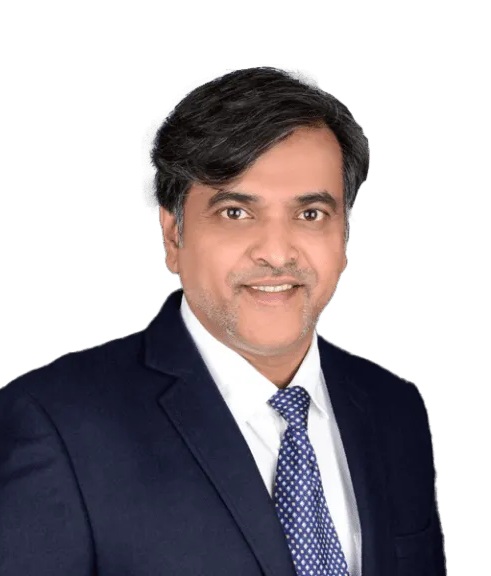
SVP and Managing Director, Astera Lab, India.
Title: To be Anounced...
Dr. Shivananda R Koteshwar is the SVP and Managing Director, India Site Head at Astera Labs, driving the company's global footprint and enabling India as a foundational piece of its accelerated growth strategy as a leading enabler for deploying AI at cloud-scale. The focus is establishing a dynamic core engineering site to create a robust new product pipeline that defines the future AI connectivity backbone. Shivoo also leads Global -IT, Facilities, and Technical Publications teams and oversees global lab infrastructure supporting Astera Labs’ growth. Previously, he held leadership roles at Synopsys, MediaTek, and Intel, contributing significantly to the semiconductor ecosystem in India. Shivoo enjoys building performing teams and takes pride in having guided and mentored a strong bench of future leaders. Shivoo is a Mentor of Change - ATAL Innovation Mission, NITI Aayog, Government of India, ESSCI Member & Startup Mentor in MEITY. Shivoo has been a catalyst in setting up many incubators/accelerators. Shivoo is a dedicated & passionate teacher who works with K12 Schools, UG/PG, and MBA colleges. Shivoo is the founder Trustee of Belakoo, a trust dedicated for underprevilaged students.He also serves as faculty in universities in Engineering, Design & Management. He is a Professor of Practice at Cambridge & Adjunct Professor at Dayananda Sagar. He also servesas a BoS Member in Mount Carmel College, BMS College & MSRIT. Shivoo was the Founding Director of the school, "The Amaatra Academy", and a Professor in the E&C Department at PES University. Shivoo is a Board of Advisors member at Shankara Cancer Institute. He is also an author, having published fiction and technical books. His latest books are "SOC Architecture", "SoC Physical Design" & "SOC-Based Solutions in Emerging Application Domains" from Springer Publications. Shivoo has also acted in a Kannada movies “Love Mocktail 2” &"Purvapara" Shivoo has received a doctorate in Education Management and is an alumnus of IIM, Bangalore and ISB, Hyderabad. Shivoo has a Postgraduate Diploma in Innovation & Design thinking, a collaborative program by MIT Sloan, Columbia Business School, and Tuck University, and a Leadership in AI from ISB. Shivoo has a Masters's Degree in Electrical Engineering from OGI, USA, and BTech in E&C from Mysore University. Shivoo has completed various Design Thinking, Strategy, Business, and Leadership Certification courses from Columbia Business School, Wharton School University of Virginia, MIT Sloan School, IIT Bombay, ESADE Spain, & the University of Sydney..
Dean, School of Computer and Information Sciences, University of Hyderabad
Title: To be Anounced...
Prof. Siba Kumar Udgata is a distinguished academician and researcher in the field of Computer Science. He earned his Ph.D. in Computer Science from Berhampur University, Odisha, India. He is currently a Professor in the School of Computer and Information Sciences at the University of Hyderabad. With more than 35 years of teaching and research experience, he has made significant contributions to artificial intelligence, machine learning, optimization, distributed computing, and wireless sensor networks. Prof. Udgata has supervised numerous Ph.D. scholars, authored several books and research publications in reputed international journals and conferences, and has successfully led multiple funded research projects. He has also served in various academic and administrative leadership roles and is widely recognized for his contributions to higher education, research, and innovation in Computer Science.
Prof. Makarand Madhao Ghangrekar, Honorable Director, NIT Puducherry
Prof. S. Sundaravarathan, Registrar, NIT Puducherry
Prof. Harigovindan V P, Dean (Research & Consultancy), NIT Puducherry
Mahasweta Sarkar, San Diego State University
Kuan-Ching Li, Providence University, Taiwan
Binayak Kar, NTUST, Taiwan
Surya Nepal, CSIRO Data61, Australia
Fuxiang Chen, University of Leicester, UK
Prasan Kumar Sahoo, Chang Gung University, Taiwan
ABM Rezbaul Islam, Sam Houston State University, USA
Pritom Rajkhowa, RiverChain, HK
Ahmed Mohamed Abdelmoniem Sayed, QMUL, UK
Dimitris Chatzopoulos, UC Dublin, Ireland
Manoranjan Mohanty, CMU, Qatar
Mukesh Prasad, UTS, Australia
Madhusanka Liyanage, University College Dublin, Ireland
Suvendu Mohapatra, Foxconn, Taiwan
Somayajulu D, NIT Manipur
Smruti Ranjan Sarangi, IIT Delhi
Bibhudatta Sahoo, NIT Rourkela
Rashmi Ranjan Rout, NIT Warangal
Devashree Tripathy, IIT Bhubaneswar
Suvendu Rup, NIT Raipur
Debasish Jena, IIIT Bhubaneswar
Suraj Sharma, Central University Bilaspur
Suchismita Chinara, NIT Rourkela
Chandra Mouli P.V.S.S.R., Central University of Tamil Nadu
Kuan-Ching Li, Providence University, Taiwan.
M. Venkatesan, Associate Professor & Head, CSE, NIT Puducherry
Ansuman Mahapatra, Associate Professor, CSE, NIT Puducherry
Asis Kumar Tripathy, SCORE, VIT Vellore
Jyoti Prakash Sahoo, NTUST, Taiwan
Ansuman Mahapatra, Associate Professor, CSE, NIT Puducherry
Satyabrata Swain, Senior Software Engineer, Microsoft
B. Surendiran, Professor, CSE, NIT Puducherry
Srinivasan A, Associate Professor, CSE, NIT Puducherry
Sanjay Bankapur, Assistant Professor, CSE, NIT Puducherry
P Kumaran, Assistant Professor, CSE, NIT Puducherry
Narendran Rajagopalan, Professor, CSE, NIT Puducherry
Praveen R, Assistant Professor, CSE, NIT Puducherry
R. Chandrasekar, Associate Professor, CSE, NIT Puducherry
Vani V, Assistant Professor, CSE, NIT Puducherry
Karthik N, Assistant Professor, CSE, NIT Puducherry
Alekha Kumar Mishra, NIT Jamshedpur
Jitesh Pradhan, NIT Jamshedpur
B. Ramachandra Reddy, NIT Jamshedpur
Umakanta Nanda, VIT-AP
Sanjay Kumar Panda, NIT Warangal
Ajit Kumar Nayak, SOA University
Manjubala Bisi, NIT Warangal
Subasish Mohapatra, OUTR Bhubaneswar
Arun Kumar, NIT Rourkela
Manmath N Sahoo, NIT Rourkela
Sourav Kanti Addya, NIT Surathkal
Biswa Mohan Acharya, SOA University
Suvendu Rup, NIT Raipur
Jitendra Kumar Rout, NIT Raipur
Satyasai Jagannath Nanda, MNIT Jaipur
P.V.S.S.R Chandramouli, CU Tamilnadu
Naresh Kumar Nagwani, NIT Raipur
Shailendra Kumar Tripathi, NIT Raipur
Sanjay Kumar, NIT Raipur
Sudhakar Pandey, NIT Raipur
Satya Prakash Sahu, NIT Raipur
Tirath Prasad Sahu, NIT Raipur
Sushil Kumar, NIT Kurukshetra
Antriksh Goswami, NIT Patna
Md. Sarfaraj Alam Ansari, NIT Sikkim
Bunil Kumar Balabantaray, NIT Meghalaya
Srinivas Sethi, IGIT Sarang
Buddhadeb Pradhan, IEM Kolkata
Rajendra Prasad Nayak, GEC Bhawanipatna
Santosh Singh Rathore, IIITM Gwalior
Vinay Raj, NIT Trichy
U S N Raju, NIT Warangal
Venkanna Udutalapally, NIT Warangal
Ashish Kumar Sahu, MANIT Bhopal
Bharat Singh, IIIT Ranchi
Koppala Guravaiah, IIIT Kottayam
Kanchan Lata Kashyap, IIIT Kottayam
Bharathi V C, VIT AP
Kakelli Anil Kumar, VIT Vellore
Srinivasa Reddy Konda, VIT AP
Venkata Bhikshapathi Chenam, VIT AP
Vivekananda G N, VIT Vellore
Ashu Abdul, SRM University AP
Kshira Sagar Sahoo, SRM University AP
M Mahesh Kumar, SRM University AP
Neeraj Kumar Sharma, SRM University AP
Banee Bandana Das, SRM University AP
Saleti Sumalatha, SRM University AP
Manish Kumar, Thapar University
Alok Kumar Shukla, Thapar University
Chandramohan Dhasarathan, Thapar University
ICADCML-2027 solicits original research papers contributing to the foundations and applications of Distributed Computing and Machine Learning in the following broad areas, but are not limited to:
Advancements in distributed systems, cloud computing, and parallel processing.
Innovations in deep learning, reinforcement learning, and AI algorithms.
Techniques for secure systems, cryptography, and threat detection.
Explorations in quantum algorithms and quantum machine learning.
The Proceedings of ICADCML 2027 will be published in Springer "Lecture Notes in Networks and Systems (LNNS)" Book series. The books of this series are indexed by SCOPUS, INSPEC, WTI Frankfurt eG, zbMATH, SCImago. All books published in the series are submitted for consideration in Web of Science. All selected and presented papers will be included in the conference proceedings.
Extended versions of selected papers presented in ICADCML 2027 are invited and recommended by the conference for submission to the following SCI, SCOPUS, DBLP, ACM Digital Library indexed journals:
Organized by: National Institute of Technology, Jamsedpur, India
Date: January 15-16, 2023
Organized by: Dept. of Computer Science and Information Engineering, NTUST, Taiwan
Date: January 9-10, 2026
Organized by: VIT-AP University, Amaravati, Andhra Pradesh, India
Date: January 5-6, 2024
Organized by: National Institute of Technology, Rourkela, Odisha, India
Date: January 28-29, 2023
Organized by: National Institute of Technology, Warangal, Telangana, India
Date: January 28-29, 2022
Organized by: Siksha O Anusandhan (Deemed to be University), Bhubaneswar, Odisha, India
Date: January 28-29, 2021
Organized by: VIT Vellore, Tamilnadu, India
Date: January 30-31, 2020
Prospective authors are invited to submit manuscripts reporting original unpublished research and recent developments in the topics related to the conference. The authors are required to submit full-text papers including abstract, keywords, introduction, methodology, result description, tables, figures, and references. The submissions may include new algorithms, experimental and/or theoretical applications of existing techniques with their strengths and weaknesses, development of new analytical frameworks, computational models of data based on natural learning systems, etc. It is required that the manuscript follows the standard Springer camera-ready format, limited to a minimum of 10 pages and a maximum of 12 pages. Submissions must include title, abstract, and keywords. The author name, affiliation, and email address should not be included in the manuscript submitted to follow a double-blind reviewing procedure. You need to submit single PDF files only; do not upload editable source files (.doc, .docx, or LaTeX files) for review. You will later be intimated for the source files if your article is selected.
The following process needs to be followed for the submission of the paper:
1. Check the format of your paper as per the conference guidelines and ensure it is plagiarism-free.
The Microsoft CMT service was used for managing the peer-reviewing process for this conference. This service was provided for free by Microsoft and they bore all expenses, including costs for Azure cloud services as well as for software development and support.
Please click the button below to submit your paper:
Dr. Ansuman Mahapatra
Associate Professor
Department of Computer Science & Engineering
NIT Puducherry, Karaikal, India
Email:
icadcml@nitpy.ac.in